
The fast-food sector continues to attract entrepreneurs seeking practical business models with clear operating structures and opportunities for expansion. A Fast Food Franchise Saudi Arabia opportunity can provide investors with an established restaurant concept, organized procedures, and professional support instead of requiring them to build every element of the business independently.
Unique Food, a specialized food company focused on serving meals, supports investors through key stages of restaurant development, including investment consultation, market analysis, location selection, training, and ongoing operational assistance.
Understanding Fast Food Franchise Saudi Arabia
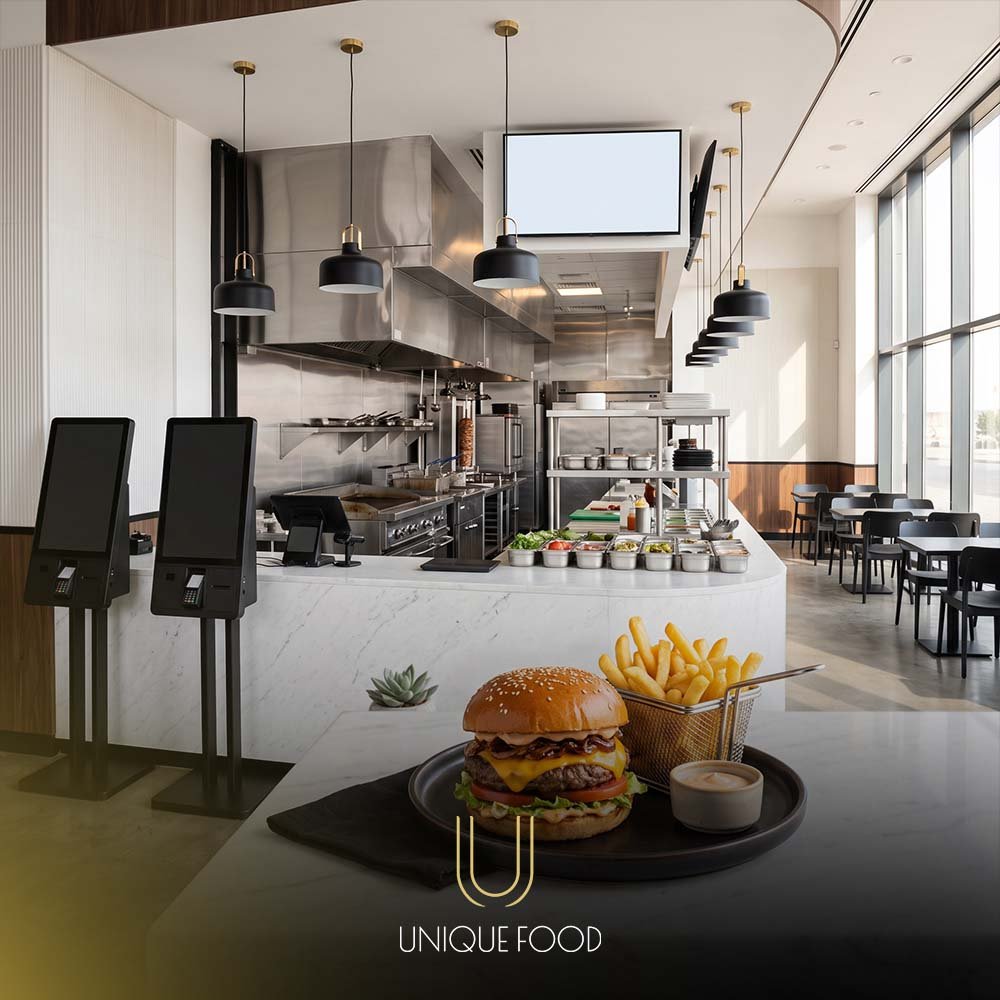
A Fast Food Franchise Saudi Arabia model allows an investor to operate a fast-food restaurant according to an established concept and defined operating standards. The value of this model comes from having a structured approach to products, service, branding, and daily management. Investors can therefore focus on implementation, customer satisfaction, and business performance while benefiting from an organized operational framework.
Established Food Concept
A developed fast-food concept gives investors a clear starting point for the project. Instead of spending considerable time creating a menu, customer experience, visual identity, and operating procedures independently, the investor works with an established structure. This can simplify preparation and allow greater focus on launching the branch efficiently.
Consistent Customer Experience
Fast-food customers generally expect convenient service and consistent products. Standardized preparation methods, service procedures, and quality controls can help create a familiar experience. Maintaining consistency is especially important when the objective is to build customer loyalty and eventually expand the restaurant concept into additional locations.
Efficient Operations
Speed and organization are important elements of fast-food management. Employees need clear responsibilities, efficient workflows, proper inventory control, and suitable technology. An organized operating system can help reduce delays, improve productivity, and support a smoother experience for both customers and employees.
Professional Training
Employees need to understand food preparation, customer service, cleanliness, safety procedures, and daily operating requirements. Professional training can help prepare the team before opening and establish standards that can be maintained throughout the restaurant’s operation.
Expansion Potential
A well-structured fast-food concept can provide opportunities for growth when the initial branch becomes stable. Investors may later consider additional branches if the operating system, management capabilities, staffing, and financial resources are ready to support expansion.
Why Invest in Fast Food in Saudi Arabia?

The demand for convenient dining makes fast food an important part of the restaurant sector. When evaluating a Fast Food Franchise Saudi Arabia opportunity, investors should consider customer behavior, location characteristics, product positioning, operating efficiency, and the potential to create repeat business.
Demand for Convenience
Modern customers often value restaurants that provide quick and accessible meals without compromising quality. Fast-food concepts can respond to this need by focusing on efficient service and convenient ordering. A restaurant that understands customer routines can create stronger opportunities for repeat visits.
Diverse Customer Segments
Saudi Arabia has a diverse consumer market with different age groups, lifestyles, and dining preferences. A fast-food concept should clearly identify the customers it intends to serve. Understanding these groups helps investors evaluate menu suitability, pricing strategy, location requirements, and service expectations.
Flexible Location Options
Fast-food restaurants can operate in different commercial environments, including shopping areas, streets with high customer traffic, business districts, and mixed-use developments. Each location has unique advantages and costs, making detailed site analysis essential before selecting the final branch location.
Opportunities for Brand Development
A successful fast-food restaurant can build recognition through consistent products, service, and customer experience. Once the concept establishes a strong operational foundation, additional branches can potentially strengthen its presence and reach new customer groups.
Technology and Convenience
Technology has become an important part of modern restaurant operations. Digital ordering, delivery management, point-of-sale systems, inventory monitoring, and customer communication can improve efficiency when integrated properly into the operating model.
How to Evaluate a Fast Food Franchise Opportunity
Before selecting a Fast Food Franchise Saudi Arabia opportunity, investors should examine the business from several perspectives. A strong concept should be commercially relevant, operationally practical, financially manageable, and supported by systems that can function effectively in the Saudi market.
Study Market Demand
Investors should research the target audience and understand what customers are looking for. Factors such as food preferences, dining habits, demographics, purchasing behavior, and demand in the proposed area can influence the suitability of the concept. Market research provides a more reliable basis for investment decisions.
Assess the Restaurant Concept
The concept should have a clear identity and an understandable value proposition. Investors should examine the menu, product quality, service style, target audience, and customer experience. A clear concept makes it easier to communicate the brand and establish a recognizable position in the market.
Analyze the Location
Location can have a major effect on restaurant performance. Accessibility, parking, visibility, customer movement, nearby businesses, competition, rental costs, and surrounding demographics should all be considered. The right location should match the behavior of the intended customers.
Review Investment Requirements
Investors should understand both initial and recurring expenses. Restaurant preparation, equipment, rent, salaries, inventory, utilities, marketing, technology, maintenance, and working capital can all influence financial performance. A complete assessment helps investors prepare realistic budgets and avoid unexpected pressure after opening.
Examine Support Services
Training, technical assistance, administrative guidance, market analysis, and location support can make the investment process more organized. Investors should understand the type and scope of support available before committing to a franchise model.
Unique Food and Fast-Food Investment
Unique Food is a specialized food company focused on serving meals and supporting investors interested in restaurant projects. The company provides practical services designed to help investors develop their projects through organized stages, from evaluating the opportunity to preparing the branch and supporting ongoing operations.
Investment Consultation
Unique Food can help investors understand the structure of a restaurant opportunity and evaluate how it fits their objectives. Consultation may consider the concept, market, location, operating requirements, and potential challenges. This provides investors with a broader perspective before they move forward with the project.
Market Analysis
A detailed understanding of the market can support better investment decisions. Unique Food can assist in considering customer characteristics, demand, commercial activity, and other factors that influence restaurant performance. This analysis can help determine whether the proposed concept is appropriate for the selected area.
Location Selection
Choosing the right site requires more than identifying a busy street. Unique Food can support investors in evaluating potential locations according to accessibility, customer traffic, surrounding businesses, competition, and suitability for the restaurant concept. Careful site selection can create stronger conditions for daily operations.
Employee Training
Fast-food operations require employees to work efficiently while maintaining quality and service standards. Training helps staff understand preparation procedures, customer interaction, cleanliness, technology, and their individual responsibilities. Proper preparation can reduce mistakes and improve consistency from the beginning.
Ongoing Operational Support
Restaurant challenges do not end when the branch opens. Administrative and technical support can help investors respond to operational issues, maintain standards, and identify areas that need improvement. Continued assistance can become particularly valuable as customer expectations and business conditions change.
Key Factors Behind Fast-Food Restaurant Success
A Fast Food Franchise Saudi Arabia project requires disciplined management after launch. Investors need to focus on several operational elements that directly affect customer satisfaction and financial performance.
Product Consistency
Customers expect fast-food products to maintain consistent taste, appearance, portion size, and quality. Standardized recipes, ingredient specifications, preparation procedures, and quality checks can help maintain this consistency and protect the reputation of the restaurant.
Service Speed
Fast-food customers often choose this category because of convenience. Long waiting times can negatively affect satisfaction. Efficient workflows, suitable staffing, organized order processing, and proper kitchen coordination can help improve service speed without compromising quality.
Inventory Management
Ingredients and packaging materials need to be monitored carefully. Excess inventory can increase waste, while shortages can interrupt service. Effective purchasing, storage, stock rotation, and consumption monitoring help maintain appropriate inventory levels and control costs.
Employee Performance
Employees directly influence the speed and quality of service. Clear responsibilities, proper scheduling, training, and performance monitoring can improve team efficiency. A prepared team is better able to handle busy periods while maintaining the restaurant’s operating standards.
Customer Feedback
Customer feedback provides valuable information about food, service, convenience, and overall experience. Management should review feedback regularly and identify recurring issues. Addressing genuine customer concerns can contribute to better satisfaction and encourage repeat visits.
Common Mistakes When Starting a Fast-Food Franchise
Investors considering a Fast Food Franchise Saudi Arabia project should approach the decision carefully. Avoiding common mistakes can help reduce unnecessary operational and financial challenges.
Choosing a Concept Without Research
An attractive concept may not necessarily suit every market. Investors should study the intended customers and local demand before making a decision. Understanding the audience helps determine whether the products, service style, and positioning are appropriate for the chosen location.
Ignoring Location Costs
A highly visible location can also come with significant expenses. Investors should compare expected customer traffic with rent, operating costs, parking, accessibility, and surrounding competition. The objective should be finding a commercially suitable location rather than simply selecting the busiest site.
Underestimating Working Capital
Restaurant operations require ongoing cash flow. Salaries, inventory, utilities, maintenance, marketing, and other expenses continue after opening. Investors should plan sufficient working capital to support the business during its early stages and account for fluctuations in sales.
Failing to Train Employees
Fast-food operations depend heavily on employee efficiency. Without adequate training, mistakes can affect product quality, service speed, and customer satisfaction. Training should be completed before opening and reinforced through continuous supervision and development.
Expanding Too Quickly
Rapid expansion can place pressure on management, staffing, supply chains, and finances. Investors should first establish stable operations in the initial branch. Expansion should follow proven performance and adequate preparation for managing additional locations.
Building a Strong Fast-Food Franchise
A Fast Food Franchise Saudi Arabia business should be developed with long-term sustainability in mind. The initial opening is only one stage of the investment. Strong systems and continuous monitoring are needed to maintain performance as the restaurant grows.
Strengthen Daily Operations
The first branch should establish clear procedures for food preparation, staffing, inventory, customer service, purchasing, and quality control. Monitoring these areas helps management identify weaknesses and develop more efficient workflows.
Build Customer Loyalty
Fast-food customers have many choices, so creating reasons for them to return is important. Reliable food quality, efficient service, cleanliness, convenience, and a positive experience can encourage repeat visits. Customer feedback can also reveal opportunities to improve the overall offering.
Monitor Financial Performance
Management should review sales and expenses regularly. Labor costs, food costs, waste, rent, utilities, and marketing expenses can all affect the restaurant’s financial results. Monitoring these indicators helps management identify areas where efficiency can be improved.
Maintain Operating Standards
Consistency becomes more challenging as a restaurant grows. Clear procedures and regular employee training help ensure that food, service, cleanliness, and customer interactions remain aligned with the required standards.
Prepare for Expansion
Before opening another branch, investors should ensure that the first operation is stable and that management systems can be replicated. Sufficient financial resources, trained employees, reliable suppliers, and effective quality control are important foundations for future growth.
Why Choose Unique Food?
Unique Food combines specialized food-sector knowledge with practical services for investors interested in restaurant development. The company’s approach focuses on helping investors organize important stages of the project and establish a foundation for sustainable operations.
Specialized Food Experience
The food industry has specific operational requirements related to ingredients, preparation, service, inventory, staffing, and quality control. Unique Food’s specialization allows investors to benefit from knowledge focused on the practical realities of food businesses.
Integrated Investment Support
A restaurant project involves several connected decisions. Market analysis, location selection, training, preparation, and operational support can all influence the final outcome. Coordinating these areas creates a more organized approach to restaurant development.
Practical Guidance
Investors may face challenges related to location, employees, operations, customer service, and cost management. Practical guidance can help identify potential issues and support decisions that are more closely aligned with the project’s requirements.
Continuous Assistance
Operational needs can change after the restaurant opens. Technical and administrative support can help investors address problems, maintain standards, and make improvements as the business develops.
Focus on Sustainable Growth
Long-term success requires systems that can remain effective as the business grows. Consistent quality, employee training, customer satisfaction, financial monitoring, and operational discipline can create a foundation for future expansion.
Steps to Start a Fast-Food Franchise in Saudi Arabia
The process of developing a Fast Food Franchise Saudi Arabia project should follow a structured sequence. Proper planning helps investors understand the opportunity and prepare the restaurant before opening.
Define Investment Objectives
The investor should identify the desired business size, available resources, preferred market, and level of involvement. Clear objectives help determine whether the concept and operating model are suitable.
Evaluate the Opportunity
The investor should review market demand, products, operating requirements, financial needs, support services, location requirements, and growth potential. This provides a complete picture of the project before significant resources are committed.
Select the Location
Potential sites should be compared based on accessibility, customer demand, parking, visibility, surrounding activities, competition, rent, and future development. The selected location should correspond with the target audience.
Prepare the Restaurant and Team
The branch should be equipped and prepared according to the required operating standards. Employees should receive training before opening so that they understand food preparation, service procedures, cleanliness, technology, and their responsibilities.
Launch and Monitor
After opening, management should track sales, customer feedback, inventory, staffing, service speed, and operating expenses. Regular monitoring helps identify problems and provides information for continuous improvement.

Conclusion
A Fast Food Franchise Saudi Arabia opportunity can offer investors a structured way to enter the food industry while benefiting from an established concept, defined procedures, and professional support. Success still depends on careful market research, appropriate location selection, financial planning, employee training, product consistency, and effective management. Unique Food supports investors with investment consultation, market analysis, site selection, training, and ongoing administrative and technical assistance, helping create a practical foundation for launching and developing a sustainable fast-food business in Saudi Arabia.