
The food and beverage sector continues to attract investors looking for organized and scalable business models. A Franchise Restaurant Business can provide a practical way to enter the restaurant industry through an established concept, defined operating procedures, and professional guidance.
Unique Food, a specialized food company focused on serving meals, supports investors through important stages of restaurant development, including investment consultation, location selection, employee training, and ongoing operational assistance.
Franchise Restaurant Business: Understanding the Investment Model
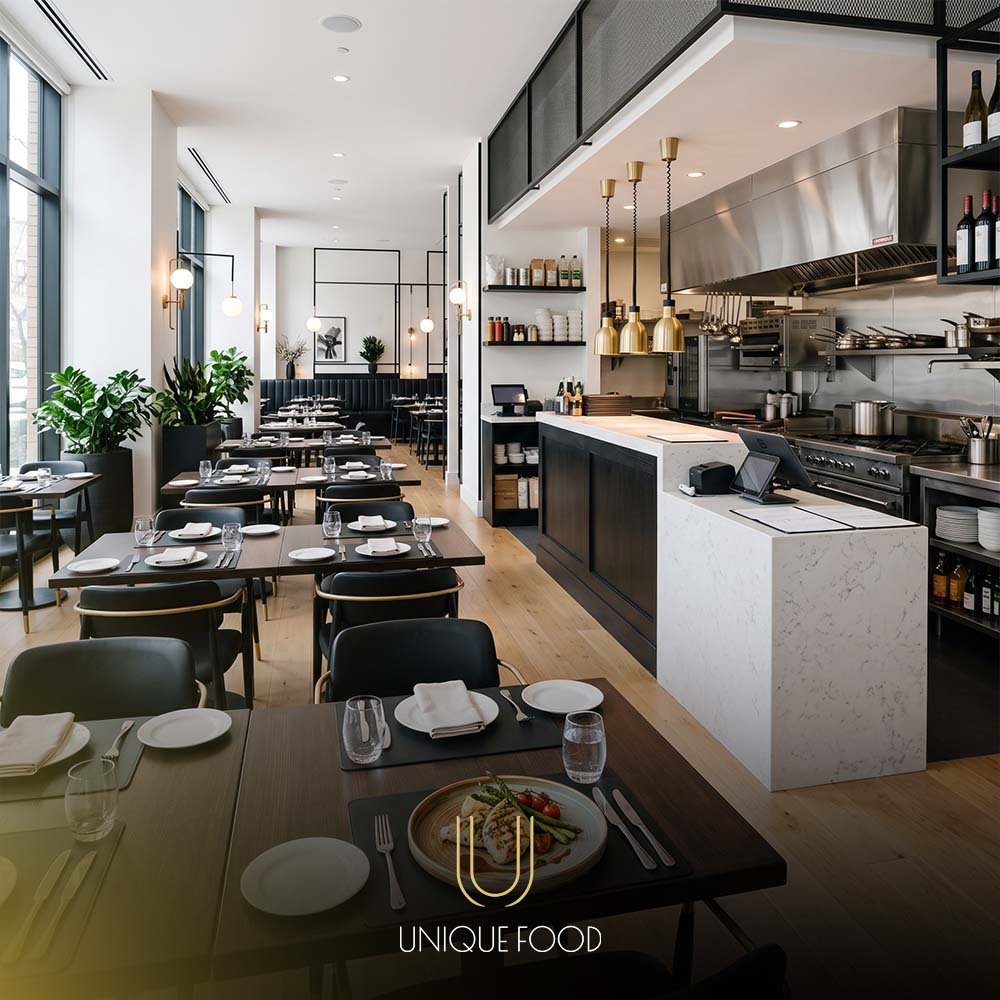
A Franchise Restaurant Business is built around an established restaurant concept that allows an investor to operate according to defined brand and operating standards. Instead of developing a restaurant identity, menu structure, and operating system independently, the investor works within an existing framework. This approach can make the preparation process more organized while providing a clear direction for daily management.
Established Restaurant Concept
An established concept gives investors a starting point for developing the restaurant without creating every business element from the beginning. The concept can include the restaurant identity, product offering, customer experience, and operating procedures. This structure allows the investor to focus more attention on execution, management, customer satisfaction, and maintaining consistent performance.
Recognizable Brand Identity
Brand identity plays an important role in attracting customers and creating recognition. A strong restaurant concept should have a clear personality that customers can understand and remember. Investors should also ensure that the brand fits the characteristics of the target market, because customer expectations and preferences can differ between locations.
Organized Operating System
Restaurant operations involve many activities that need to work together. Food preparation, inventory, staffing, cleanliness, customer service, purchasing, and quality control all require clear procedures. An organized operating system helps employees understand their responsibilities and gives management a practical framework for monitoring daily performance.
Professional Support
Launching a restaurant involves decisions that can influence performance long after opening. Professional support can help investors assess potential locations, prepare the project, train employees, and manage operational requirements. This guidance can be especially useful for investors who want to enter the food sector without depending entirely on previous restaurant experience.
Growth Potential
A well-organized restaurant concept can provide opportunities for future expansion. Once the initial branch reaches stable performance, investors may consider developing additional locations. Expansion becomes easier when procedures, training systems, supply processes, and quality standards can be repeated without compromising the customer experience.
Why Invest in a Franchise Restaurant Business?

A Franchise Restaurant Business can provide investors with a structured alternative to creating a completely new restaurant brand. The value of the model comes from combining an established concept with operational systems and support. However, investors should still conduct detailed research before making a financial commitment.
Faster Project Preparation
Developing a restaurant from the ground up can require extensive work involving branding, menu development, customer research, operating procedures, and testing. A franchise can reduce some of this development time by providing an existing business framework. This allows the investor to focus on preparing the branch and implementing the established model effectively.
Access to Operating Knowledge
Restaurant management requires practical knowledge that is often developed through experience. A franchise can provide access to established procedures and training that help employees and management understand how the business should operate. This can reduce the learning curve and create a more organized approach to daily restaurant activities.
Defined Customer Experience
Customers often return to restaurants because they know what type of food and service to expect. A defined franchise concept can help establish consistency in products, service, presentation, and overall experience. Maintaining these standards can strengthen customer confidence and contribute to repeat visits.
Structured Management
A clear business structure helps management monitor employees, inventory, purchasing, service quality, and costs. Defined responsibilities make it easier to identify operational problems and take corrective action. This structure can also provide a foundation for developing management systems that remain effective as the restaurant grows.
Potential for Multiple Locations
Investors who have long-term objectives may use the first branch as a foundation for expansion. Once the business model has been tested and the operation becomes stable, additional locations can be considered. This requires financial resources, management capacity, trained employees, and reliable systems.
How to Evaluate a Franchise Restaurant Business
Before starting a Franchise Restaurant Business, investors should assess the opportunity from both commercial and operational perspectives. A successful concept in one location does not automatically guarantee similar results elsewhere. Market demand, location, financial requirements, and management capabilities should all be considered.
Study the Target Market
Market research helps investors understand the people they intend to serve. Demographics, spending behavior, food preferences, lifestyle, and dining habits can influence restaurant demand. The concept should provide products that appeal to the local audience and offer a clear reason for customers to choose it.
Analyze the Location
Location can significantly affect restaurant performance. Accessibility, parking, visibility, surrounding businesses, customer movement, rental costs, and nearby residential or commercial areas should be studied. The best location is not necessarily the busiest one; it is the location that provides the strongest fit with the restaurant’s target customers.
Review Financial Requirements
Investors should understand the complete financial structure before proceeding. Initial preparation costs are only one part of the investment. Rent, salaries, ingredients, utilities, equipment, marketing, maintenance, technology, and working capital can all affect the financial performance of the restaurant.
Examine Operating Requirements
The investor should understand how many employees are required, what equipment is needed, how products are prepared, how inventory is managed, and what customer service standards must be followed. Knowing these requirements in advance makes preparation more accurate and reduces unexpected operational difficulties.
Consider Long-Term Development
A franchise should be evaluated according to its potential beyond the first branch. Investors should consider whether the concept can be replicated, whether training can support additional teams, and whether the supply and management systems can handle expansion.
Unique Food and Franchise Restaurant Business Opportunities
Unique Food is a specialized food company focused on serving meals and supporting investors interested in restaurant projects. The company provides practical services that help investors approach restaurant development through organized stages, from evaluating the opportunity and selecting locations to preparing employees and supporting operations.
Investment Consultation
Unique Food can help investors understand the structure of the proposed opportunity and determine whether it matches their objectives. Consultation can consider the concept, target market, operating requirements, location, and potential challenges. This broader perspective allows investors to make decisions based on multiple factors rather than focusing on a single aspect of the project.
Market Assessment
A restaurant should be developed according to the characteristics of its target market. Unique Food can support investors in examining customer demand, surrounding commercial activities, and the characteristics of the proposed area. Market information can then contribute to more informed decisions about the restaurant’s positioning and location.
Location Selection
Choosing the right location requires careful analysis. Unique Food can support investors in reviewing potential sites according to accessibility, customer movement, surrounding businesses, competition, and operational suitability. A carefully selected site can improve customer access and create better conditions for the restaurant’s daily activities.
Employee Training
Employees directly influence the quality of food and service. Training helps staff understand their responsibilities, operating procedures, food handling requirements, cleanliness standards, and customer interaction. Preparing the team before opening can reduce mistakes and create greater consistency during the restaurant’s early operating period.
Ongoing Support
Restaurant management continues to require attention after the branch opens. Administrative and technical challenges may arise as the business develops. Ongoing support can help investors address operational issues, maintain standards, and identify areas where procedures or performance can be improved.
Key Factors Behind Restaurant Success
A Franchise Restaurant Business requires more than an attractive concept. Long-term performance depends on consistent execution, effective management, customer satisfaction, and careful financial control. Investors should establish systems that support these areas from the beginning.
Consistent Product Quality
Customers expect the products they purchase to maintain the same quality over time. Standardized recipes, ingredient specifications, storage procedures, and quality checks can help protect consistency. Reliable product quality contributes to customer confidence and supports the reputation of the restaurant brand.
Effective Team Management
Employees are essential to restaurant performance. Clear responsibilities, appropriate scheduling, training, and performance monitoring can improve efficiency. A well-managed team can deliver faster service, reduce operational errors, and create a more positive experience for customers.
Inventory Control
Food inventory needs continuous monitoring because both shortages and excessive stock can create problems. Effective purchasing, storage, consumption tracking, and waste management can help control costs while ensuring that the restaurant has the products required for daily operations.
Customer Satisfaction
Customer satisfaction is influenced by many factors, including food quality, service, cleanliness, atmosphere, and convenience. Restaurants should monitor feedback and use it to identify practical improvements. Understanding customer expectations can help management strengthen the elements that encourage repeat visits.
Financial Monitoring
Management should regularly review sales and expenses to understand the financial condition of the restaurant. Labor, inventory, waste, rent, utilities, and marketing costs can all affect profitability. Regular monitoring allows management to identify unnecessary expenses and make better operational decisions.
Common Mistakes Investors Should Avoid
Starting a Franchise Restaurant Business without adequate preparation can create challenges that may have been avoidable. Investors should understand the common mistakes associated with restaurant development and take steps to address them before opening.
Relying Only on Brand Popularity
Brand recognition can be valuable, but it should not be the only reason for choosing a franchise. Investors need to understand whether the brand’s products and customer experience fit the selected market. Local demand should always be evaluated before making the final decision.
Underestimating Recurring Expenses
The opening budget does not represent the complete financial requirement. Restaurants have continuous expenses that must be paid regardless of temporary changes in sales. Investors should plan for salaries, rent, ingredients, utilities, maintenance, marketing, and working capital.
Choosing the Wrong Location
A poor location can limit customer access and affect revenue potential. Investors should evaluate parking, accessibility, visibility, customer profiles, surrounding activities, competition, and rental costs. A detailed location study can reduce the possibility of committing to a site that does not match the restaurant concept.
Neglecting Training
Employees need to understand both operational procedures and customer service expectations. Inadequate training can lead to inconsistent products, slower service, and customer complaints. Training should begin before opening and continue as the restaurant develops.
Expanding Too Quickly
Rapid expansion can create pressure on finances, management, staffing, and supply systems. Investors should first establish stable operations in the initial location. Once the business demonstrates consistent performance and the necessary systems are ready, expansion can be considered more carefully.
Building a Sustainable Franchise Restaurant Business
A successful Franchise Restaurant Business should be managed with a long-term perspective. Opening the restaurant is only the beginning. Sustainable performance requires continuous attention to customers, employees, costs, product quality, and operational development.
Strengthen the First Branch
The first branch provides valuable information about customer behavior and operational performance. Management should use this stage to identify the strongest products, evaluate staffing, monitor costs, and improve service. Building a stable first operation creates a stronger foundation for future development.
Develop Customer Loyalty
Repeat customers can provide greater stability for restaurant sales. Consistent products, professional service, cleanliness, and a positive experience can encourage customers to return. Listening to customer feedback can also help the restaurant understand which aspects of its offering create the greatest value.
Use Performance Data
Sales reports, inventory data, employee performance, customer feedback, and operating expenses can reveal important patterns. Reviewing these indicators regularly allows management to identify problems early and make decisions based on actual business information.
Maintain Brand Standards
Consistency becomes increasingly important as a franchise develops. Employees across different branches should understand the same product and service standards. Maintaining consistency protects the identity of the brand and helps customers receive a familiar experience at different locations.
Plan Expansion Carefully
Expansion should be based on readiness rather than simply the desire to grow. Investors should confirm that management systems, financial resources, employee training, supply arrangements, and quality controls can support another branch before moving forward.
Why Choose Unique Food?
Unique Food provides specialized food-sector knowledge and practical support for investors interested in developing restaurant projects. The company focuses on helping investors approach their projects with clear planning and organized execution.
Specialized Food Industry Knowledge
Restaurant businesses have unique requirements related to food preparation, ingredients, staffing, inventory, service, and customer experience. Unique Food’s specialization in food services provides investors with industry-focused knowledge that can help them understand these requirements.
Integrated Project Support
Restaurant development involves several connected stages. Consultation, market assessment, site selection, preparation, training, and operational support all influence the final result. Coordinating these elements can help create a smoother transition from planning to daily operation.
Practical Guidance
Investors may need support when evaluating locations, staffing plans, operational processes, and customer experience. Practical guidance can help identify potential difficulties before they become major problems and support more effective decision-making.
Continuous Assistance
The restaurant environment can change after opening. Customer expectations, staffing conditions, operational requirements, and market trends may evolve. Continuous administrative and technical support helps investors respond to these changes while maintaining the required standards.
Sustainable Development
A long-term approach focuses on building systems that remain effective as the restaurant grows. Quality control, employee training, customer satisfaction, and financial monitoring all contribute to creating a stable business that can potentially expand into additional locations.
Steps to Start a Franchise Restaurant Business
Starting a Franchise Restaurant Business should follow a clear process that allows investors to evaluate the opportunity before committing significant resources. Proper preparation can reduce uncertainty and create better conditions for a successful launch.
Define Investment Objectives
The investor should determine the desired business size, available resources, preferred market, and level of involvement. Clear objectives make it easier to identify a concept that fits the investor’s expectations and long-term plans.
Evaluate the Opportunity
The concept, market demand, operating model, financial requirements, location needs, and growth potential should be reviewed carefully. This assessment gives investors a complete picture of the responsibilities associated with the project.
Select the Location
Potential sites should be compared according to customer demand, accessibility, parking, surrounding businesses, competition, rental costs, and future potential. The selected location should match the restaurant’s concept and intended audience.
Prepare the Restaurant and Team
The premises, equipment, technology, inventory, and staffing should be prepared according to the required standards. Employees should receive appropriate training before opening so they understand their roles and can provide a consistent customer experience.
Launch and Monitor
After opening, management should track sales, customer feedback, inventory, staffing, and operating expenses. Continuous monitoring allows investors to identify areas that require improvement and make informed decisions as the restaurant develops.

Conclusion
A Franchise Restaurant Business can offer investors a structured route into the food industry by combining an established concept with defined operating procedures and professional support. However, successful restaurant investment requires careful market research, appropriate location selection, financial planning, employee preparation, customer-focused service, and continuous performance monitoring. Unique Food supports investors through consultation, market assessment, site selection, training, and ongoing administrative and technical assistance, helping establish a stronger foundation for sustainable restaurant operations and future growth.