
Starting a restaurant does not always require building an entirely new brand, developing operating systems from scratch, and creating a customer base without previous market experience. A Low Cost Restaurant Franchise can provide an alternative for investors who want to enter the food industry through a structured concept with established procedures and professional guidance.
Unique Food, a specialized food company focused on serving meals, supports investors through important stages such as investment consultation, market analysis, location selection, training, and ongoing operational support.
Understanding a Low Cost Restaurant Franchise
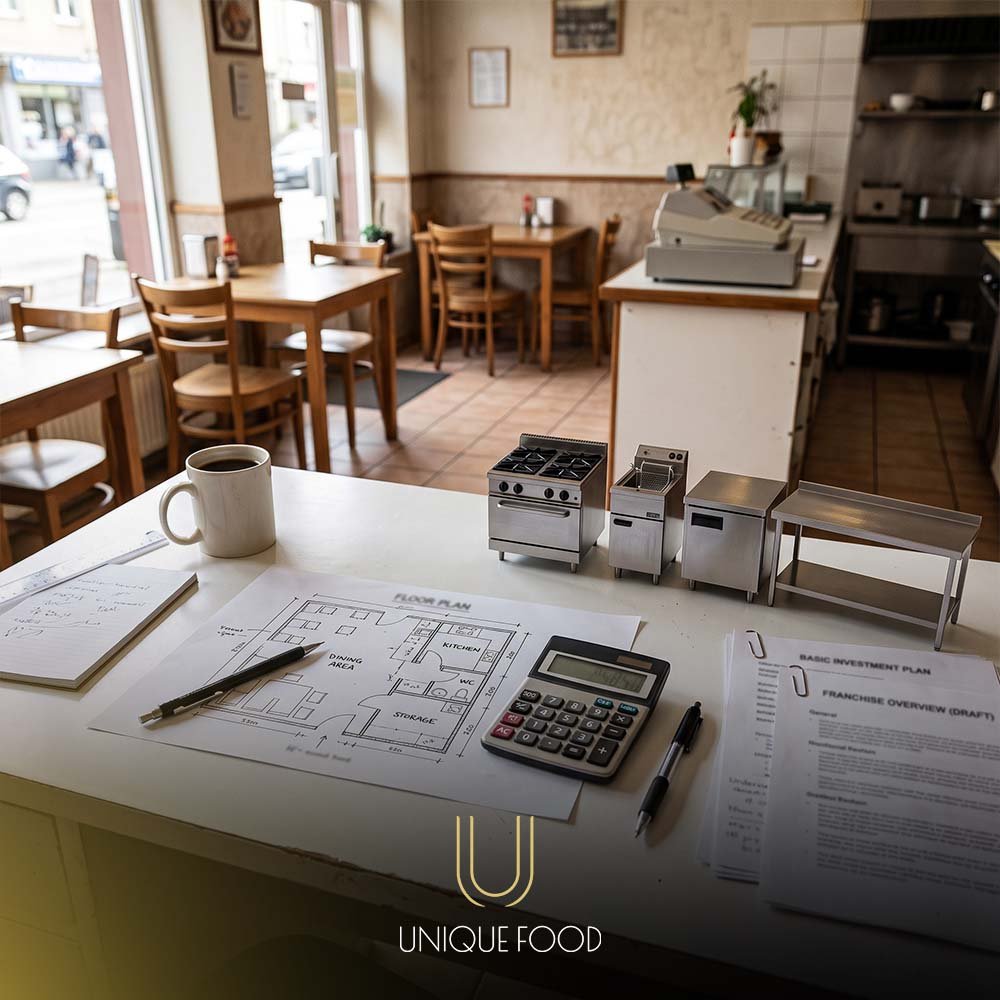
A Low Cost Restaurant Franchise is a restaurant investment model designed around a more controlled financial structure while maintaining an organized business concept. The objective is not simply to reduce spending, but to use available resources efficiently and avoid unnecessary expenses during preparation and operation.
Controlled Initial Investment
One of the main considerations for investors is the amount required to establish the restaurant. A carefully structured franchise can help investors understand where their resources need to be allocated, including equipment, preparation, staffing, inventory, and working capital. Effective planning can prevent unnecessary spending while ensuring that essential operational requirements are covered.
Efficient Restaurant Format
A restaurant does not always need an oversized space or complex setup to serve customers effectively. The appropriate format depends on the concept, target audience, menu, and location. Choosing a practical format can help control preparation and operating requirements while creating an environment that remains suitable for customers.
Established Operating Procedures
Starting independently often requires developing procedures for food preparation, service, inventory, staffing, and quality control. A franchise can provide an existing operating framework, allowing the investor to focus on implementation instead of spending significant resources developing every procedure independently.
Professional Guidance
Cost-conscious investors can benefit from professional guidance because incorrect decisions can become expensive. Support with location selection, preparation, employee training, and operations can help reduce avoidable mistakes and make better use of available resources.
Potential for Future Growth
A lower-cost entry model can provide a starting point for investors who want to grow gradually. Once the first branch achieves stable performance, the investor can evaluate opportunities for improvement or expansion according to available resources and business results.
Why Consider a Low Cost Restaurant Franchise?

Investors looking for a Low Cost Restaurant Franchise are often interested in balancing investment requirements with operational quality. The goal should not be to minimize every expense, but to prioritize spending according to what the restaurant actually needs to perform effectively.
Better Resource Allocation
Every restaurant has essential and non-essential expenses. A structured approach allows investors to prioritize areas that directly influence customer experience and daily operations. Equipment, employee preparation, product quality, and inventory management should receive appropriate attention while unnecessary expenses are controlled.
Reduced Development Complexity
Creating a new restaurant brand can involve extensive planning, testing, branding, menu development, and operational preparation. A franchise can simplify part of this process by providing an established framework. This can help investors direct their time and resources toward launching and managing the business.
Easier Operational Planning
Clear procedures make it easier to estimate staffing requirements, equipment needs, inventory, and daily workflows. When these elements are organized before opening, investors can prepare more accurately and reduce the likelihood of unexpected operational problems.
Opportunity for First-Time Investors
A structured restaurant model can be particularly attractive to investors entering the food industry for the first time. Training and operational support can help them understand the practical aspects of restaurant management and avoid relying entirely on trial and error.
Gradual Business Development
Investors do not necessarily need to pursue rapid expansion. Starting with a manageable operation allows them to learn about their customers, monitor performance, and strengthen their systems before considering additional investment.
How to Evaluate a Low Cost Restaurant Franchise
Before choosing a Low Cost Restaurant Franchise, investors should examine the complete business model rather than focusing solely on the initial investment. A lower entry requirement is useful only when the concept can also support efficient and sustainable operations.
Review the Complete Cost Structure
Investors should identify all expected expenses, including preparation, equipment, rent, salaries, ingredients, utilities, marketing, maintenance, technology, and working capital. Understanding recurring costs is just as important as knowing the initial investment because these expenses influence the restaurant’s ability to operate over time.
Analyze the Target Market
A low-cost concept still needs strong customer demand. Investors should study the demographics, spending behavior, food preferences, and dining habits of the intended audience. The restaurant should offer a product that customers value rather than simply being inexpensive to establish.
Evaluate the Location
Location selection should balance commercial potential with cost. An expensive location may create unnecessary financial pressure, while a very cheap location may not provide sufficient customer access. The ideal site should be appropriate for the concept, target audience, and operating model.
Examine the Operating Model
Investors should understand how the restaurant will function every day. Staffing, food preparation, inventory, purchasing, service, technology, and quality control should all be clearly defined. Efficient procedures can help control costs without compromising the customer experience.
Consider Support and Training
Professional support can have significant value for cost-conscious investors because mistakes may require additional spending. Training and operational assistance can help employees and management understand the correct procedures from the beginning.
Unique Food and Low-Cost Restaurant Investment
Unique Food is a specialized food company focused on serving meals and supporting investors interested in restaurant projects. The company provides practical services designed to help investors plan, prepare, and operate restaurant businesses through a more organized process.
Investment Consultation
Unique Food can help investors understand the structure of the proposed opportunity and evaluate its suitability according to their objectives. Consultation can consider investment requirements, target customers, operating needs, location factors, and potential challenges before the project moves forward.
Market Analysis
Understanding the market helps investors avoid building a restaurant around assumptions. Unique Food can support the evaluation of customer profiles, demand, commercial conditions, and the characteristics of the selected area. This information can contribute to better decisions regarding the restaurant concept and location.
Location Selection
Finding an affordable location should not mean choosing an unsuitable one. Unique Food can assist investors in evaluating potential sites according to accessibility, customer traffic, surrounding businesses, competition, rent, and compatibility with the restaurant concept.
Employee Training
Proper training helps employees understand food preparation, customer service, cleanliness, operating procedures, and their responsibilities. Training can reduce operational mistakes and help the restaurant maintain consistent standards without relying on costly trial-and-error processes.
Ongoing Support
Restaurant management continues to require attention after launch. Administrative and technical support can help investors respond to operational challenges, maintain standards, and identify opportunities to improve efficiency.
Factors That Can Reduce Restaurant Operating Costs
A Low Cost Restaurant Franchise should focus on efficient management rather than simply reducing the initial investment. Several operational practices can help control expenses while preserving food quality and customer satisfaction.
Effective Inventory Control
Food waste can have a direct impact on restaurant expenses. Monitoring purchasing, storage, consumption, and product movement helps management maintain appropriate stock levels. Proper inventory control can reduce unnecessary waste while ensuring that essential ingredients remain available.
Efficient Staffing
Labor costs should correspond with actual customer demand. Proper scheduling can help avoid excessive staffing during quiet periods while ensuring enough employees are available during busy times. Clear responsibilities and good training can also improve productivity.
Waste Reduction
Waste can occur through excess preparation, incorrect storage, damaged products, or poor purchasing decisions. Monitoring waste patterns can reveal where improvements are needed. Small operational adjustments can contribute to meaningful savings over time.
Smart Purchasing
Purchasing should be based on actual consumption and planned demand. Over-ordering can create unnecessary inventory and waste, while under-ordering can interrupt service. Organized purchasing procedures help maintain the balance between product availability and cost control.
Technology Utilization
Appropriate technology can improve ordering, inventory tracking, sales reporting, and management processes. The objective should be to use technology where it creates measurable operational value rather than adding unnecessary complexity or expense.
Common Mistakes When Choosing a Low-Cost Franchise
Investors searching for a Low Cost Restaurant Franchise should remember that low initial cost does not automatically mean low overall business risk. Several mistakes can undermine the financial advantages of a carefully planned restaurant model.
Focusing Only on the Lowest Investment
The cheapest opportunity is not necessarily the most suitable. Investors should evaluate the concept, market demand, operating system, support, location, and recurring expenses. A slightly higher initial investment may provide better systems and stronger long-term potential.
Cutting Essential Expenses
Cost control should never compromise food quality, employee preparation, cleanliness, safety, or customer experience. Reducing essential expenses can create operational problems that ultimately cost more to correct.
Choosing an Inexpensive but Poor Location
A low-rent location may appear attractive financially, but insufficient customer access can limit sales. Investors should consider the relationship between rent, customer traffic, accessibility, target audience, and expected operating performance.
Ignoring Working Capital
Some investors concentrate on opening costs and forget the funds required to operate after launch. Salaries, inventory, utilities, maintenance, and marketing continue to require cash flow. Adequate working capital is therefore essential.
Neglecting Training
Poor employee preparation can lead to waste, slow service, product inconsistencies, and customer complaints. Proper training may require an initial investment, but it can help reduce operational errors and protect the restaurant’s performance.
Building a Sustainable Low-Cost Restaurant
A Low Cost Restaurant Franchise should be designed around efficiency and sustainability. Investors need to create systems that control unnecessary expenses while maintaining the standards customers expect from the restaurant.
Focus on Core Products
A carefully structured menu can make purchasing, preparation, inventory, and employee training more manageable. Focusing on products that customers value can help reduce unnecessary complexity while supporting a more efficient kitchen operation.
Maintain Product Standards
Cost control should never lead to inconsistent food quality. Standardized recipes, portion control, ingredient specifications, and quality checks can help maintain reliable products while allowing management to monitor food costs carefully.
Build a Strong Team
Employees can have a direct effect on operational efficiency. Proper training, clear responsibilities, and effective scheduling can improve productivity and reduce avoidable mistakes. A capable team can help the restaurant achieve more with the available resources.
Monitor Financial Results
Sales and expenses should be reviewed regularly. Management can use financial data to identify high-cost areas, waste, labor inefficiencies, and products that perform differently from expectations. This allows the business to make adjustments based on actual results.
Improve Continuously
A low-cost restaurant should not remain static. Management should continuously evaluate customer feedback, operating costs, product performance, and service quality. Small improvements can strengthen efficiency without requiring major additional investment.
Why Choose Unique Food?
Unique Food combines specialized food-sector knowledge with practical services designed to support restaurant investors. The company’s approach focuses on helping investors establish organized operations while making informed decisions about important aspects of the project.
Specialized Food Industry Knowledge
The restaurant industry has unique requirements involving food preparation, inventory, staffing, customer service, and quality control. Unique Food’s specialization in food services provides investors with industry-focused knowledge that can help them understand the practical requirements of restaurant operations.
Integrated Support
Restaurant development involves multiple stages that influence one another. Investment consultation, market analysis, location selection, training, and operational support can work together to create a more organized process and reduce gaps between planning and execution.
Practical Guidance
Investors can encounter challenges when choosing locations, preparing employees, managing costs, or organizing daily operations. Practical guidance can help identify potential issues and provide a clearer path toward efficient restaurant management.
Continuous Assistance
Operational requirements may change after the restaurant opens. Ongoing administrative and technical support can help investors address problems, maintain standards, and identify opportunities for improvement as the business develops.
Focus on Sustainable Growth
A cost-conscious business should still have the ability to grow. Efficient systems, consistent quality, trained employees, and disciplined financial management can create a foundation that supports future development when the investor is ready to expand.
Steps to Start a Low-Cost Restaurant Franchise
Starting a Low Cost Restaurant Franchise requires careful planning to ensure that available resources are used effectively. A structured process can help investors avoid unnecessary expenses and prepare the business for sustainable operation.
Define the Investment Budget
The investor should establish a realistic budget that includes both setup costs and ongoing working capital. Understanding the available resources helps determine the appropriate restaurant format and prevents commitments that exceed financial capacity.
Study the Market
The target audience, customer demand, food preferences, spending patterns, and local competition should be evaluated. A cost-efficient restaurant still needs a strong commercial reason for customers to choose it.
Select an Appropriate Location
Potential locations should be compared according to rent, accessibility, customer traffic, parking, visibility, surrounding businesses, and target demographics. The goal is to find an affordable location that still provides suitable commercial potential.
Prepare the Operation
The restaurant should be equipped according to its actual needs, while employees should receive proper training before opening. Careful preparation helps reduce waste and operational problems during the early stages.
Monitor Performance
After launch, management should track sales, inventory, waste, staffing, customer feedback, and operating expenses. Regular monitoring provides the information needed to improve efficiency and maintain financial control.

Conclusion
A Low Cost Restaurant Franchise can be an attractive option for investors who want to enter the food industry while maintaining greater control over their available resources. However, the objective should be efficient investment rather than simply choosing the cheapest option. Market demand, location, operating procedures, product quality, employee training, working capital, and ongoing support all influence the success of the project. Unique Food supports investors with investment consultation, market analysis, location selection, training, and ongoing administrative and technical assistance, helping establish an efficient and sustainable foundation for restaurant operations.